Product engineering
for StreamWolf
an app for subscription cycling and content discovery
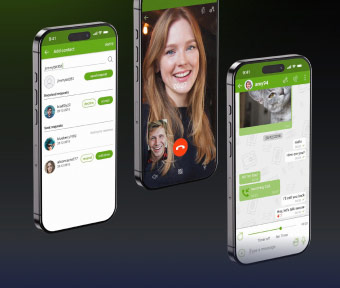
StreamWolf shows what streaming costs, suggests what to watch, and cancels or restarts services in a few taps. We took over the part-built product, shipped it on both app stores, and keep it running as the sites underneath change.
StreamWolf helps people spend less on streaming. You see what your subscriptions cost, find what is worth watching, and cancel or restart a service in a few taps. Aetsoft joined as StreamWolf's product engineering partner in February 2024, took responsibility for an existing codebase and delivery setup, and brought it to its first public release in October 2025. An AI layer keeps the subscription automation steady as provider pages change, and a recommendation engine drives Discover. StreamWolf's own team builds both, and we integrate them with the app and the backend.
001
ClientStreamWolf, a UK consumer technology company with a global team.
002
ChallengeMajor streaming services provide no public APIs for account or billing actions, so these actions must run through provider websites that change frequently.
003
SolutionBrowser automation handles subscription actions, while an AI layer helps it adapt when provider pages change. StreamWolf’s recommendation engine powers content discovery.
004
Aetsoft's roleSince February 2024, Aetsoft has built and maintained the mobile apps, backend, infrastructure, and browser automation. The team also integrates StreamWolf’s AI systems and manages QA and releases.

Engagement lead
Pavel Sivayeu
 CTO, Aetsoft Inc
Ran delivery and led the Aetsoft team across the engagement, 2019 to 2022
Streaming subscriptions became rentals
People sign up for a show and leave when it ends. Deloitte found that 41% of US consumers cancelled a streaming service within six months, and 22% later came back to the same one.
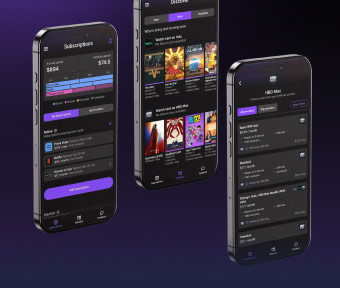
StreamWolf is built for that habit, in two halves. One tracks money: connect the accounts you pay for and see the monthly and yearly total in one place. The other answers what to watch next. Discover and the watchlist show where a title is streaming, so you can start a service when your show is ready and stop when you are done.
We came in after the product had already started
StreamWolf came to us with a codebase, infrastructure and a set of provider workflows already in place. The company needed a team to take on the product and finish the work for its first public release on the App Store and Google Play.
We spent the first few weeks getting to know the codebase. The repository showed us what had been built, but many of the decisions behind it were undocumented. Before changing anything, we worked with the client to understand that context.
Since then, we have been responsible for the mobile apps, backend, infrastructure, subscription automation, QA, and releases.

We came in after the product had already started
StreamWolf came to us with a codebase, infrastructure and a set of provider workflows already in place. The company needed a team to take on the product and finish the work for its first public release on the App Store and Google Play.
We spent the first few weeks getting to know the codebase. The repository showed us what had been built, but many of the decisions behind it were undocumented. Before changing anything, we worked with the client to understand that context.
Since then, we have been responsible for the mobile apps, backend, infrastructure, subscription automation, QA, and releases.
The clean design would be an integration. Ask each service for an account endpoint, read the plan, post a cancellation, done. Major streaming providers all keep account and billing actions on their own web pages, and none offers a third-party API.
The popular workaround is to read the user's bank or card feed and work out the subscriptions from the charges. It works, but it means handing over a feed of everything you spend just to find and cancel a streaming subscription you no longer need.
The third route was already the design when we arrived. Our job has been to make it hold. Users sign in through each provider's own login page, and StreamWolf needs no access to their bank or card feed.
Solution
We build automation that expects the page to move

A flow built against a fixed page layout breaks the first time the provider ships a redesign. So the browser automation reads the screen the way a person does, by the visible text. When a panel slides halfway down the page, it still finds the button. Rename that button, or add a confirmation step, and the match fails. We started with cloud browsers on our side and now run the automation on the phone itself, inside the app. The next section covers how much of that the automation works out on its own.
That is harder than it sounds. A cancellation path branches, offers you a discount to stay, and asks for a confirmation on a screen that appeared last quarter. Paths also differ by country, and some pages are closed to traffic from outside their market, so we test from where the user actually is.
The apps are React Native, so one team ships iPhone and Android together, and the backend runs serverless on Cloudflare. Both choices keep mobile and backend delivery inside one small team, with no server estate underneath it.
How it works

Where AI earns its place in this product
StreamWolf uses AI in two parts of the product: content discovery and subscription automation.
For discovery, its recommendation engine helps users decide what to watch across their streaming services. Its output powers Discover, the watchlist, and prompts about when it may be worth restarting a subscription.
For subscription management, the browser automation we built works directly through each provider’s website. When a provider changes its page or moves a control, an AI layer helps the automation understand the new layout and find the right action. This means fewer website changes require us to rewrite the workflow by hand.
StreamWolf’s internal team develops the AI tools. We integrate them with the app, backend, and browser automation, then take the resulting flows through the same QA and release process as the rest of the product.
AI helps our automation find the right control, but the cancellation still follows the user’s instruction. The app checks the account afterward and reports the result. A poor recommendation can waste an evening, while a failed cancellation can cost the user money.
The provider decides when a cancellation is finished
Cancellation does not always end access immediately. Most providers keep the subscription active until the paid period expires, so StreamWolf checks the provider on a schedule and shows when access will end. Users can also refresh the status manually, while an expired provider session triggers a new sign-in.
Shipping the first public release
StreamWolf 1.0 reached the App Store on 17 October 2025, with the Android build close behind on Google Play. Both went out as US Early Access.
We have continued to update StreamWolf since launch, adding services and adapting existing connections as provider websites change. What we learn from one provider often shortens the work when another changes.

PCWorld cancelled
a real Netflix subscription
with one tap
In January 2026 PCWorld's Jared Newman tried the app during Early Access. He connected his own accounts, watched StreamWolf read his plans and prices, and cancelled and then restarted his Netflix subscription by tapping a button. What it asked him for came to an email address and a sign-in on each provider's own site.

We could describe this as the core promise of StreamWolf, but a journalist testing it on his own Netflix account is better proof. StreamWolf shared the article that day and credited our team with driving development. Steve Lewis also wrote about our role in the product from his own profile.
Results
Two-week sprints, a demo at the end of each, written updates in between. We manage the code, the backlog and the releases inside StreamWolf's own delivery environment, so the team there sees each one firsthand.
“Aetsoft is very professional, has good communicators, and has high-quality developers.”
Steve Lewis.  Co-founder, StreamWolf. Verified Clutch review.

A live product on both app stores. StreamWolf went from a part-built codebase to a public release on iPhone and Android, and has stayed in development since then.
Subscription automation across major streaming services. The product handles subscription actions directly through provider websites. We maintain those connections as page layouts and account flows change.
Cancelling takes a tap. By hand it means finding the right account page and working through whatever the provider puts in the way, then repeating it to come back. In PCWorld's test, both took one button.
Frequently asked questions about product engineering for StreamWolf
-
How does an app cancel a streaming subscription for you?
It works the same controls you would. The app opens the streaming service’s own page inside the app, you sign in through that provider’s login flow, and browser automation walks through the cancellation steps. It needs no access to your bank or card feed.
-
How do you take over a codebase somebody else wrote?
You read it before you touch it. The code tells you what was decided. The reasoning has to be rebuilt from what the client knows, what the tests assume and what the product does in front of a user.
Very little software starts from an empty repository. If yours is part-written and needs a team to take it over, ship it, and keep it working as the systems around it change, that is the job here.