How Aetsoft helped Velocity Career Labs
Build a live verifiable credentials network
Aetsoft helped shape the architecture and built the proof of concept, then spent four years inside Velocity's squads taking the network to mainnet.
Velocity Career Labs set out to let people own their education and career records and share them on their own terms, on infrastructure no single company would control. Aetsoft worked with the founders on the early architecture and built the proof of concept. Delivery then spanned the blockchain layer, the Credential Agent and the React Native Career Wallet, along with the web and deployment work. The network reached mainnet in January 2022 and has since passed two million issued credentials.
001
ClientVelocity Career Labs, the commercial company that initiated Velocity Network and publishes the Career Wallet
002
ChallengeCredential infrastructure that competing organisations would operate themselves
003
SolutionA permissioned network spanning issuer trust, blockchain, Credential Agent, wallet and DevOps
Career records are trusted slowly, and checked one phone call at a time
A degree, a licence, a job title. Each is a claim about a person that someone else has to verify, and verification is slow, manual and expensive. A candidate waits while an employer confirms something that was already true.
Velocity Career Labs, founded in 2018, set out to change the mechanics. An employer or a school would issue a signed credential once, the person would keep it, and a future employer could check it without going back to the issuer. Velocity calls this the Internet of Careers, a registered trademark of the Velocity Network Foundation.

Velocity was designed as shared infrastructure. The organisations using the network would also govern and operate it, and many of them compete directly with each other.
Fourteen organisations from human capital management and education came together to launch the Velocity Network Foundation, publicly announced on 28 January 2020. The network today is considerably wider. As listed by the Foundation in July 2026, around 15 independent organisations operated nodes and took part in consensus. Aon's assessment business, HireRight, Korn Ferry, Randstad and UKG are among them.
Its published membership directory listed roughly 45 organisations at the same date. They include HR and education technology vendors, background screening firms and professional licensing bodies, alongside a US state government. A board of 20 directors is elected annually by the membership, and members shape the rulebook through steering committees.
Anyone can build on the network and connect to it. Issuing credentials requires accreditation, and running a node requires Foundation approval.
That operating model set the engineering brief. The software could not be one hosted service. It had to install inside a competitor's own cloud, run under that organisation's control, and stay compatible with every other operator through coordinated releases rather than a shared management chain. Shipping to other companies' servers, run by teams outside your management chain, is harder than shipping to your own.
This is the constraint that produced the Credential Agent. During the engagement it was the gateway between an organisation's internal systems and the shared network, and it existed because no single company could sit in the middle.
Solution
How we worked, from one CTO to full squads

The first phase was small.
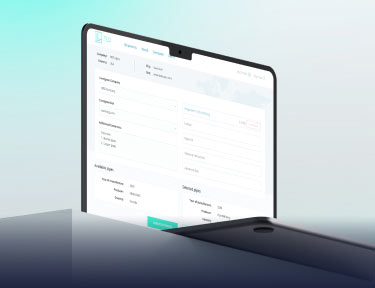
Aetsoft worked directly with the client's CTO, turning early architecture thinking into a working proof of concept. That build was under way in early 2020, It already carried the shape of the final system: a holder app, a Credential Agent and a blockchain node, with an issuer registry and the flows between them.
As the design firmed up, Velocity Career Labs began hiring its own engineers. Aetsoft specialists worked alongside them in squads. Project management sat on the Aetsoft side early and moved to the client as its internal team matured. Six to ten Aetsoft people worked inside the client's squads on blockchain development, wallet development, and augmentation of the core research and development team.
What we built with Velocity
Aetsoft built the proof of concept and continued developing the product. From the point the squads merged, the components below were delivered jointly with Velocity's engineers.

The blockchain layer
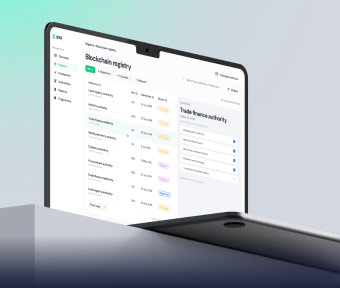
The on-chain component is a trust and verification registry, not a database of people. It carries the accreditation records, the permissions and the credential status described above. Issuer DID documents resolve separately through did:web or did:ion.
Aetsoft built this on a permissioned Ethereum blockchain stack using Hyperledger Besu and wrote the Solidity contracts holding the registry logic. The connector and subscriber services linking the off-chain system to the chain were ours as well.
The Credential Agent
This is what a member organisation runs to join the network. It exposes the holder API, runs issuing and verification, and keeps the organisation's keys and data isolated from both the blockchain and the holder. The squads built it as Node.js services, with Swagger specifications and Jest integration tests. It deploys on AWS, Google Cloud, Azure or Oracle.
The Career Wallet
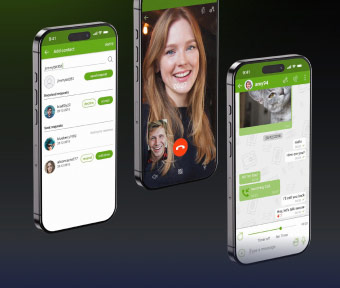
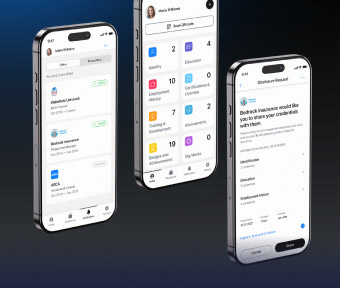
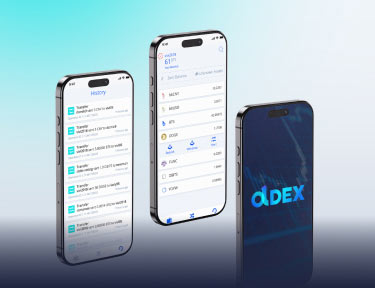
The wallet is where a person claims credentials, stores them privately and decides who sees them. The squads built it in React Native. A holder can claim a signed credential from a past employer or school, and self-report entries that are not yet verified.
Answering a disclosure request releases only the fields the relying party asked for. Applying for a job can be as simple as scanning a QR code and approving what to share. The wallet is published on the App Store and Google Play.
Identity and onboarding
Before someone receives strong credentials, the network has to know who they are. The team integrated third party KYC into onboarding. Making that feel native inside the wallet is harder than it sounds, because providers inject their own screens and messages and users notice every handoff. The work included intercepting and reshaping those messages so the flow stayed inside the wallet, and storing identity data in the right jurisdiction for the required period.
Token, payment and reward flows
Verification on the network is a paid transaction, and the incentive model rewards issuing and lets node operators stake and earn. Aetsoft implemented the token payment and reward flows and the fiat rails behind them.
Deployment, delivery and quality
Because members run their own agents and nodes, every update has to keep a live network of independent operators running. Aetsoft built the CI and delivery pipelines on GitHub Actions, set up monitoring and alerting across the blockchain, the agents and the services, and ran manual and automated QA.

The decisions
that shaped it
Choosing the chain took real work. When the proof of concept began in late 2019, Hyperledger Besu was still an incubation project inside the Hyperledger community, and it graduated to active status the following year.
Committing a production network to it meant betting on a codebase that had not yet graduated. Aetsoft evaluated it against the network's actual requirements during the proof of concept, documented the risks, and the project committed to a permissioned Ethereum design.
These are Velocity Network milestones reported by the Foundation, achieved by the wider ecosystem rather than by Aetsoft alone
active credential network
By early 2025 the network had passed two million credentials issued, with more than 100 registered issuers operating through tens of Credential Agent Operators. Credentials had been claimed in more than 185 countries. In healthcare, the Foundation's SkillsONWARD programme in Florida and Texas reported an 81% opt-in rate among practitioners offered digital credentials.
In 2025 the Foundation began moving the wider technology stack, now called Verii, to the Linux Foundation's Decentralized Trust initiative. The announced scope covers the wallet SDKs, the registrar services and the credential issuer and verifier agents. Those components have developed well beyond their state in April 2024. Their move into open-source stewardship shows where the product environment went after the work described here.
Results
“Their technical competence, performance, and speed were excellent.”
— Andres Olave Linkedin. CTO, Velocity Career Labs; Head of Technology Velocity Network Foundation. Verified Clutch review.

- What reached production. A permissioned network, a working Career Wallet on iOS and Android, and issuing and verification infrastructure that member organisations deploy themselves.
- What the operating model made possible. Independent organisations run their own nodes and agents inside their own environments. As of 1 January 2022, 28 mainnet nodes were operating across independent organisations. The Foundation announced the mainnet launch on 1 March 2022.
- What the engagement delivered. Aetsoft delivered for four years while Velocity built its internal engineering organisation and the system moved from testnet to mainnet. The principal programme ran from March 2020 to April 2024, and Aetsoft has since provided occasional UX support for the Career Wallet.
Frequently asked questions about verifiable credentials
-
What did Aetsoft build for Velocity Career Labs?
Aetsoft helped shape the architecture and built the proof of concept. Delivery covered the Hyperledger Besu blockchain layer and Solidity smart contract development, the Node.js Credential Agent and the React Native Career Wallet. It also covered web interfaces, KYC and token flows, and the CI and monitoring pipelines. The engagement ran from 2019 through April 2024.
-
Which standards does a verifiable credentials network rely on?
The W3C Verifiable Credentials Data Model structures the credential and its proof. W3C Decentralised Identifiers provide verifiable identifiers and public keys. DIF Presentation Exchange structures how a relying party requests evidence and how a wallet answers. Velocity adds its own trust layer above these.
-
Why is a verifiable credential standard not enough on its own?
The standard makes a credential tamper-evident and lets anyone check the signature. It leaves open whether the issuer is who they claim to be and whether they are an authoritative source for that credential type. Velocity Network closes that gap with a vetted issuer registry, accreditation credentials and issuer permissions.
-
What goes on the blockchain and what stays off it?
The registry of accredited issuers and their permissions, the credential types and credential status go on-chain, so any relying party can run its checks independently. Issuer DID documents resolve through did:web or did:ion. Credentials and personal data stay in the holder’s wallet.
-
Who operates Velocity Network?
Vetted member organisations operate their own nodes and take part in consensus, under governance by the nonprofit Velocity Network Foundation. Anyone can build on the network; running a node requires Foundation approval.
-
Ready to build verifiable credentials or decentralised identity infrastructure?
Explore our blockchain development services or discuss your architecture with our team.
Explore our blockchain development services or discuss your architecture with our team.