How a centralized exchange integrated
Balancer AMM
for a better token access
A regulated exchange added thousands of tokens with no need to manage order books for every new asset
001
ClientEuropean crypto exchange
002
ChallengeThe exchange wanted to offer more tokens to clients
003
SolutionEmbedded swaps by integrating Balancer’s AMM
The centralized exchange saw that small cap coins were getting more trading volume
To capture this growth, they needed to make more tokens available on their platform. There are over 16,000 coins on the market, but this exchange only supported a few dozen tokens. They wanted to change that.
The problem was that until now every new token had to be listed manually. Each listing meant launching a separate market with its own liquidity for every trading pair. They had to build and actively manage order books to keep the spreads usable.
Centralized trading works well for major assets but it does not scale. Manually managing thousands of markets was not an option.
Solution
How we fixed liquidity with Balancer’s AMM


If the exchange could not manage
thousands of markets manually, it needed
a different way to access liquidity
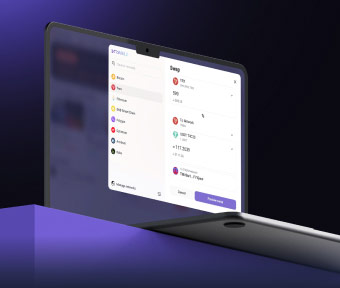
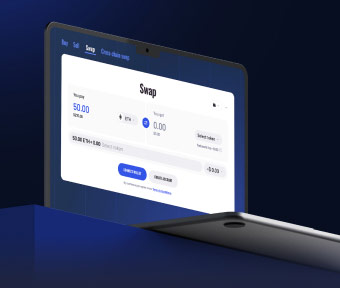
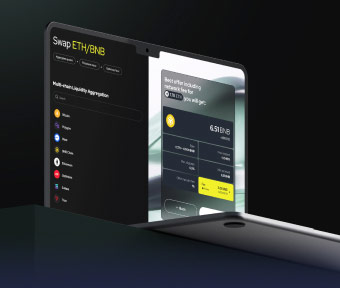
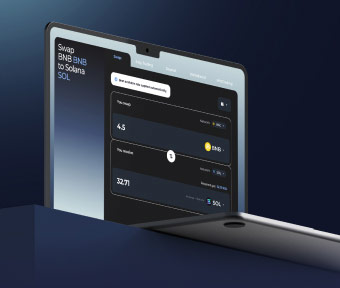
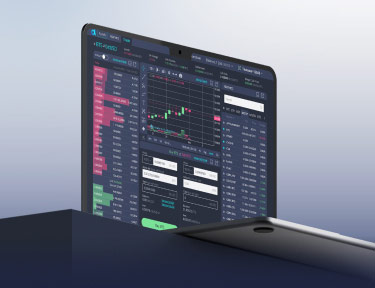
We integrated Balancer as the AMM liquidity layer. Instead of launching a separate internal order book for every pair, the exchange could route eligible swaps through existing on-chain liquidity pools.
The exchange no longer had to build every market from scratch before users could access a token. If an asset had suitable liquidity and passed the platform’s internal checks, it could be added to the swap flow much faster.
Most AMMs are quite rigid. They rely on two-token pools with a fixed 50/50 split. So liquidity providers are forced to hold half of the value in both tokens, even if one of them is a small cap riskier asset. As a result, many smaller tokens never attract enough liquidity to support trading.
Balancer is more flexible. It allows custom weighting, the split doesn’t have to be 50/50. A pool can hold 90% of liquidity in USDC and only 10% in the small cap token. With Balancer, it’s easier for the exchange to offer more tokens.
A centralized exchange runs on an internal ledger, so users aren’t interacting with blockchains. Once the exchange added AMM swaps, each trade required an on-chain transaction, which meant introducing wallets and transaction signing
For a regulated platform, this could not be merged into the core trading system. The exchange needed a separate wallet layer between user accounts and on-chain execution.
We used DFNS to provide that layer. It allowed the platform to create and manage custodial wallets through the backend, without exposing users to external wallets or self-custody.
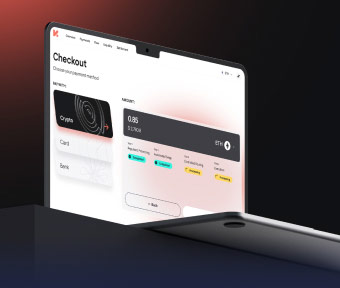
For users trading is the same. But behind the interface, the system handles wallet creation, signing, and asset movement in a controlled environment.

Integration backend
and execution flow
Once the wallet layer was in place, the remaining challenge was execution. On-chain swaps require routing, signing, transaction submission, gas handling, and protection against price movement.

Gas was managed
by the platform
So users did not need to hold native tokens to complete a trade. The system estimated fees, covered gas where needed, and adjusted execution to current network conditions.
Results
The exchange no longer had to list every token as a separate CEX market.
“When we had to list tokens one by one, we would inevitably miss most of them. We needed a more scalable solution for adding small cap tokens. Aetsoft found a way to introduce swaps into our exchange.”

If a token had enough liquidity and passed internal checks, it could be added to the swap flow much faster. What used to take weeks could now be done in minutes.
Users still traded inside the same app. They did not need to learn how DeFi works and connect an external wallet.