VPLedger: how we built a layer 1 blockchain
A Danish digital infrastructure company needed a blockchain for verified counterparties and accountable operators.
Aetsoft designed the full protocol, from the consensus mechanism to the smart contract layer.
001
ClientA Danish digital infrastructure company building regulated blockchain services
002
ChallengeBusinesses needed a chain where counterparties are verified and operators are accountable
003
SolutionVPLedger: a proof-of-authority layer 1 on Graphene 3.0, with identity and governance at the protocol level
The market had hundreds of blockchains and no guarantees
In 2019, public blockchains gave businesses two versions of the same anonymity problem. Counterparties were anonymous, so a company could not know who it was trading with, and network operators were pseudonymous, so nobody answered for the infrastructure itself.
Our client planned to offer blockchain financial services to payments, escrow, and asset issuance between counterparties in different countries. That set three requirements.
- Users had to be verifiable to each other.
- Operators had to be identifiable.
- A legal entity had to answer for the network.
Aetsoft was engaged to design and build a protocol around them.


- Users had to be verifiable to each other.
- Operators had to be identifiable.
- A legal entity had to answer for the network.
Aetsoft was engaged to design and build a protocol around them.
Forking a live network would have been faster, and the requirement that ruled it out was operator identity. Proof of work scales poorly, consumes enormous computing power, and leaves block producers anonymous.
Proof of stake ties influence to the size of a holding, and its anonymous validators can return to the network even after attacking it. The client needed validators who are verified and answerable, so Aetsoft built the consensus around identity.
VPLedger builds on Graphene 3.0, the storage and execution engine family behind BitShares, which Aetsoft engineers knew from core protocol work. On top of it, Aetsoft designed a new protocol and a new consensus mechanism. No running network was forked.
Solution
How we built the VPLedger layer 1 blockchain


VPLedger runs on Veritas Persona by Governance (VPG), a consensus mechanism Aetsoft designed as a reinterpretation of proof of stake: it reaches consensus through the identification of validators rather than the proportion of ownership.
The validator set does not exceed 25 accounts, which keeps computing requirements low. Admission is strict. Each candidate obtains a public notarial licence and is verified through two independent channels, the operating entity's checks and the public notary databases. Mismatched results end the candidacy. A validator must also hold at least 1,000 VPL tokens, a threshold adjustable by referendum. The first validator is the operating legal entity, which selects the next ones; over time, validators admit new nodes by democratic voting.
Block producers are selected conditionally at random, and an offline node loses its turn to the next one. Validator data stays encrypted for ordinary network participants, but a validator who acts against the network is removed from block production, loses reputation and future earnings, and has their verified identity disclosed to blockchain users. In proof of stake, a removed validator can return anonymously under a new key. In VPG, they cannot.
Here’s what we did

Verified once, private afterwards
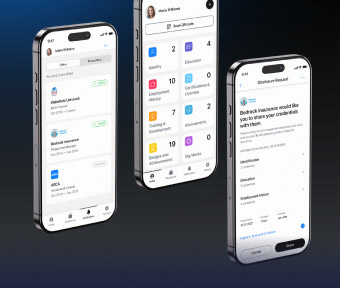
After KYC, a user's identity data is encrypted with their own private key, and only the user can open it. A counterparty can receive access for a single transaction or on a standing basis, and authorities obtain access through a court decision. Verification is delegated: third-party KYC operators connect through the protocol API. A user proves their identity once and controls every disclosure afterwards.
Ethereum's contracts on Graphene's engine
Aetsoft integrated a quasi-Turing-complete Ethereum virtual machine into the chain, so developers write Solidity and keep their existing tooling while execution runs on Graphene's bandwidth. Decentralised file storage runs through IPFS. The smart contract layer carries the financial functions the client's services required: stablecoins with Global Forced Settlement, which keeps the value constant even if the issuer disappears, escrow, recurring and scheduled payments, and daily withdrawal limits split across savings and checking accounts.
Approval chains, on chain
VPLedger's account permissions carry weights per role. A project manager might hold 30%, a lawyer 30%, and the CEO and CFO 20% each, with a payment clearing at an 80% threshold; the transaction confirms when the threshold is met, in whatever order the signatures arrive. Linked accounts can create circular approval dependencies, so Aetsoft built loop detection into the blockchain to keep a misconfigured hierarchy from blocking payments.
One protocol beneath five services
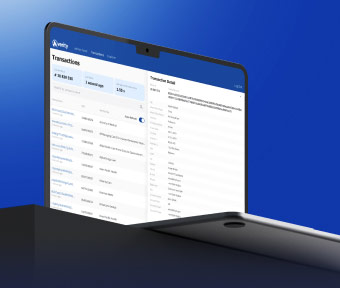
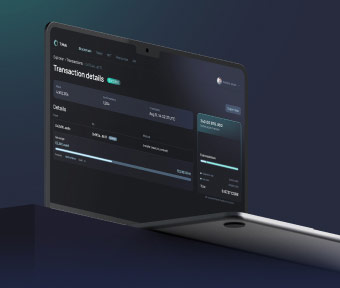
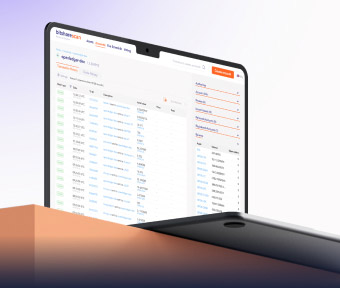
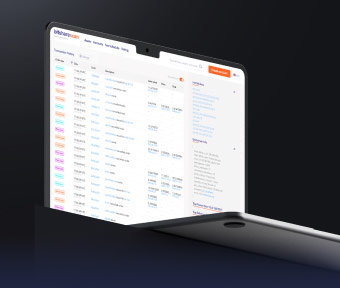
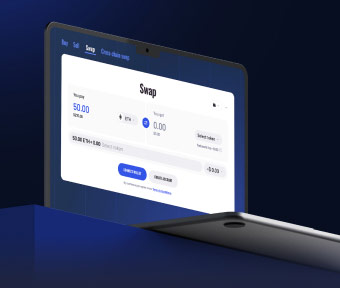
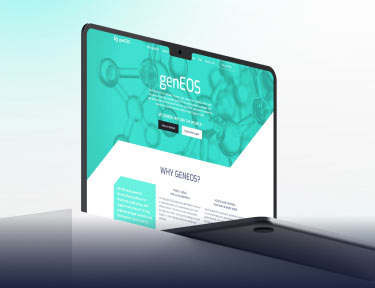
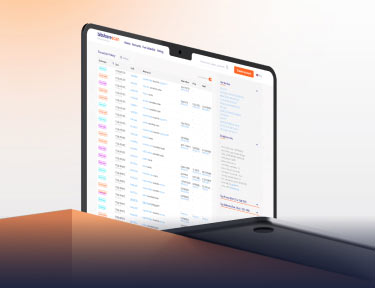
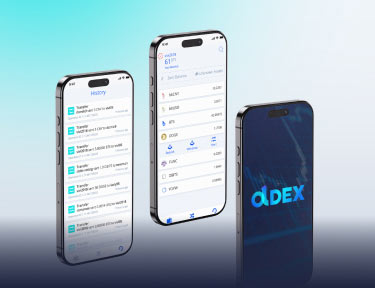
The ecosystem includes five services on the same protocol base: a digital asset exchange for crypto and fiat with margin trading and cross-chain atomic swaps, a crowdfunding platform for ICO, STO, and IEO flows, a freelancer marketplace with escrow-settled payments, a multi-platform wallet with the encrypted VPLedger Passport identity mode, and a block explorer. Each runs on the chain's native assets, escrow contracts, and identity layer rather than on infrastructure of its own.

The decisions that
shaped the protocol
-
Decision
Cap validators at 25, all verified.
-
What it cost
A more centralised topology than PoW chains.
-
Why we took it
The white paper's analysis found leading PoW networks already concentrated over half their hash power in a few anonymous pools. VPLedger concentrates less and holds every operator identifiable.

-
Decision
EVM inside Graphene.
-
What it cost
Ethereum's gas model came along with it.
-
Why we took it
Solidity developers and existing audited contract patterns, running on Graphene throughput.
Results
The VPLedger public testnet went live in late 2019 with a purpose-built Layer 1 architecture based on Graphene 3.0.
“Deliverables were consistently provided on time or ahead of agreed milestones, even as the scope evolved to incorporate additional compliance, governance, and architectural considerations.”
— Ronny Boesing, CEO, Byteshares Andelsforening A.M.B.A, verified Clutch review

- VPG consensus and validator admission model
- Hierarchical account permissions with loop detection
- Native asset, payment, and escrow functions
- EVM execution integrated into the chain
- Referendum governance over configurable network parameters
- Wallet, block explorer, API, and testnet specifications
Frequently asked questions about layer 1 blockchain
-
What is a compliance-by-design blockchain?
A compliance-by-design blockchain builds regulatory requirements into the platform instead of leaving them to each application. VPLedger does this at three levels: validator identification is a consensus rule, delegated KYC is a protocol-level identity service reached through the API, and legal accountability rests with the operating entity under the network’s constitution.
-
Can a blockchain run KYC and keep users private?
Yes. On VPLedger, identity data is verified once and then encrypted with the user’s private key. The user chooses each disclosure, for one counterparty, one transaction, or on a standing basis, while authorities gain access through a court decision.
-
How long does it take to build a layer 1 blockchain from scratch?
Aetsoft’s core engagement on VPLedger ran for nine months in 2020, with a team of six to ten engineers, following the 2019 design work. A production mainnet takes longer, since consensus complexity, audits, and testnet duration set the pace.
Aetsoft has built layer 1 protocols from the ground up and supported public networks since 2018, from BitShares to VPLedger to chains in production today. Tell us what your network has to guarantee, and we will tell you what that means at the protocol level.