Building Totemo
Street-art gallery's operations and artist royalties inside an NFT platform
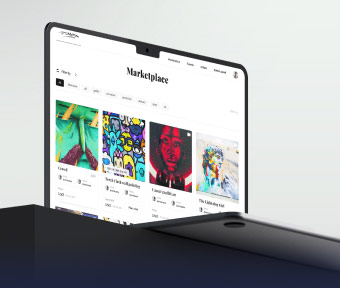
Totemo represents street artists in Tokyo, turns their walls into digital works and sells them to collectors it has invited. Its staff decide which artists join, which works go on sale and what each sale pays out. Aetsoft built the platform those decisions run on, from admitting an artist to paying the royalty.
Street art earns its makers nothing and is gone within months. Totemo photographs and animates the work with the artist, then sells it as a digital piece. A buyer is relying on Totemo having picked the artist and approved the work. A gallery makes those calls in a back room; here they had to be made in software. A staff member could publish for an artist who held no cryptocurrency, and neither of them paid to mint it.
001
ClientTotemo KK, Shibuya, Tokyo. A street-art gallery that represents artists, issues digital editions of their work and sells them to invited collectors.
002
ChallengeStreet art disappears and pays its makers nothing, and a photograph of a wall proves nothing about who painted it. Totemo needed a sellable object, a record of who made it that a buyer could rely on, and a commercial model that paid the artist on every sale. Running all three meant gallery operations: choosing artists, approving work, agreeing terms piece by piece. Most of its artists held no cryptocurrency.
003
SolutionAn NFT platform shaped to those operations. Totemo's staff admit artists, review the work artists submit, and set the fee, the artist's share and the royalty for each piece. Both the creator record and those terms are attached to the same token, so a buyer can check who Totemo attested made the work and the artist is paid whenever it sells. A manager can publish for an artist who holds no cryptocurrency, and the artist is still recorded as the creator.
004
Aetsoft's roleWe defined the product and carried it into production: business analysis and requirements, system architecture, UX and UI design, then frontend, backend, Ethereum smart contracts and infrastructure.


Engagement lead
Artem Kirylin
 Commercial Director, Aetsoft Inc
Led consulting and the client relationship.
The work disappeared within months and earned its makers nothing
Street art has an audience and no way to reach a buyer. Paint goes on someone else's wall. It gets covered, demolished or worn off, usually inside a year. Even where a collector wanted a piece, there was nothing to hand over, and a photograph proves nothing about who painted it.
Totemo's founder, Marty Roberts, had been photographing this work around Tokyo. He put it plainly: artists "don't get paid, and they take a lot of risks", and the work is "ephemeral, so it will be destroyed eventually".
Totemo's answer was to make something durable out of the same work: photograph the finished piece, animate it with the artist, and sell that as a digital work the artist had authorised. Walls stayed where they were and eventually went.


Street art in Tokyo had a following and new work every week, and no way to turn either into a transaction. An artist's share of a sale was the first money most of this work had ever produced, and Totemo took a fee on a category nobody else was selling.
because its margin sat in terms it set
piece by piece
The money arrived from several places, and never in the same proportions twice. The first sale. A share of resales inside Totemo. Live events, which settled outside the platform and where most buyers reached for a card. And a payment to whoever owned the wall, who had otherwise got nothing for it.
Totemo could have run this by hand: agree terms with the artist offline, mint on an existing marketplace, sell there, then pay the artist itself. That route was cheaper and it was available. It would have meant giving up most of the gallery operations and taking on the job of paying every artist out of its own account. Building the platform made the payment direct and kept the operations in one place. The company wanted "complete control over this system" and "spent a lot of time building out the tech" instead.
The case rests on three conditions, and each one set a requirement for the build.
- Artists have to accept being represented, so the platform has to let one person act for another without the work changing hands.
- Buyers have to take Totemo's word about who made a piece, so that record has to be checkable by someone outside the company.
- And no platform-wide rate can carry terms that change from piece to piece.
What Totemo brought to this that nobody could buy was the roster itself: relationships in Tokyo's street-art scene, built by introduction.
Solution
A Totemo staff member stood between the artist and the chain

Once someone at Totemo has to approve every piece, the software needs to know who they are, what they may decide, and who can act for an artist who is not there.
We had to settle which of that belonged on a blockchain. Three things had to hold whether or not Totemo was still there to vouch for them.
Work had to stay bound to whoever made it, including when somebody else published on their behalf. Roles that decide what happens to a piece had to be recorded, because they determine where the money goes later.
And the payment had to run without Totemo in the middle: one sale owed the artist, Totemo, sometimes a previous collector and sometimes somebody with no account at all. The buyer's wallet sends that transaction straight to the chain, so Totemo never receives the artist's share. Sales at live events settled outside the platform, where most buyers reached for a card.

All three ride on the same token, and that is the reason for a token rather than a certificate plus a payment rule. A buyer checking who Totemo attested made the work finds the terms in the same place, and both outlive the platform.
A database and a payment provider would have covered most of the rest. The cost of that route is Totemo holding money owed to artists, a creator record checkable only by asking Totemo, and an asset that lasts as long as the company does. Everything that moves no money and settles no entitlement stayed in an ordinary back office: moderation, reports, the catalogue, user administration and the events.
That line shows up in the path a piece took. Seven steps stood between a wall and a buyer, and the platform carried every one but the second, which happened on the street and in the studio. Below is the path an artist took when submitting their own work. A personal manager publishing for an artist followed a shorter one, without the review at step four.

Resale runs shorter. A collector reselling picks a piece from their own collection and chooses how to place it again. There is no second review and no second mint. The terms were fixed when Totemo first accepted the piece, and they apply again automatically.
1. Totemo approved the artist. Staff confirmed a person could publish through the gallery. Where a manager acted for an artist, the artist granted that permission first.
2. The work was prepared digitally. Totemo photographed the street piece and, for some works, made animated material with the artist.
3. The work was defined. Artist or manager entered the details and chose a single token or multiple copies.
4. Totemo reviewed the submission. A staff member checked the artwork and the artist information before it could go further.
5. The terms were set and the piece was placed. On acceptance Totemo set its fee, the artist's share and the royalty. Artist or manager then chose how the piece was offered.
6. The token was created on Ethereum, linked to the artist, the piece and the owner.
7. The work entered the catalogue. Collectors bought it, and the money went where the terms said it should.

Joining was free, and a chosen name was enough. There are no passwords. The wallet address is the account, and an artist appears under a chosen name tied to it, which is what let people take part who had no intention of being publicly named.
Step one is a signed transaction, and so is every other grant of authority, each paid for by the party granting it. Staff authenticate an artist by scanning their wallet QR code, which also creates their studio page. Nothing about joining came out of the artist's pocket.
Representation is the only grant that runs both ways. A staff member offers to act as an artist's personal manager, the artist accepts or declines from their own wallet, and competing offers cancel the moment one is taken.

Smart contract design let a manager publish without becoming the artist.
When a manager published, what they signed was the token data. The signed authorisation went to the backend and waited there, and the token was created later inside the buyer's own transaction. Totemo recorded the artist as creator, and the resale entitlement belonged to the artist regardless of who had signed. The manager did the work, the buyer paid the gas, and the artist kept the authorship and the money.
Separating the signing wallet from the creator record and the payment right is smart contract development work.
One limit we set on purpose: offers and auction finalisations always went back to the artist to decide in their own wallet.

One review fixed the terms and was the only route to the chain.
Steps four and five are one moment in the gallery's terms: what is shown, and on what. A decline sends the piece back to be amended. A manager publishing on an artist's behalf sets the split directly, without a separate review, because a manager is already a staff user.
The terms then travel by signature. The backend signs them, and the buyer's transaction carries that signature to the contract, so the deal agreed at approval is the deal the sale executes.

Minting waited for the buyer,
who paid for it
Six placement types were available, constrained by contract type. The matrix above has the set and its rules.
Auction, buy now and flash sale were eligible for lazy minting, so the buyer covered the minting cost and an artist could put work on the market holding no cryptocurrency at all. Gift and open for bids mint upfront, and there the publisher pays.
Nothing was absorbed for the people spending money: a buyer with an empty wallet was sent there to buy cryptocurrency and come back. Ethereum was the chain because that is where those buyers already held their money.

Terms travelled with the piece and paid out on every sale inside Totemo.
Fee, artist share and royalty sat on the piece itself, over a platform default, with a separate split for each event. Recipients could include the artist, Totemo, the collector on a resale and the owner of the wall. That is the same problem asset tokenization work meets whenever the asset is not uniform.
A wall owner needed no account and no login. Totemo held a payout address for them against the event, and the contract paid it when a piece from that event sold. A gallery can promise that and then chase it by hand.
Those rules ran inside Totemo. The same problem under regulation, with heavier controls, is the securities tokenization platform case.

Staff ran the gallery from the back office, before and during a sale as well as after.
Staff could suspend a bidder, block or delete an account, find a user by wallet QR code and cancel an auction. They also ran the events much of the work came out of, each with its own location, materials and split.
Reporting covered sales by type, time, trade size, seller, buyer and every money recipient, plus earnings by period and bid activity as CSV. Having told four parties they each have a share, Totemo had to show each of them what arrived.
Alongside the tokenised catalogue sat roughly 5,000 works that were never minted, so an artist's range could be shown without everything being for sale.
We defined the product and wrote the requirements in 2021, then shipped version 1 in October 2022. Monthly releases continued through Q2 2023, and we supported the platform with updates as needed until early 2024.
the product before writing any of it
Requirements and architecture. This is analysis work before it is engineering work, and we started with written documents. A software requirements specification covered six user roles, sixteen process flows, the placement and transaction types, the moderation rules and the money model. A system architecture document ran alongside it.
Design, signed off before build. UX and UI began as mockups, moved to full designs, and went to Totemo for approval before anyone wrote production code.
We designed for the mobile browser first and brought desktop layouts after, because that is where the audience for this work already was.
MVP, then live operations. We built the MVP, then released into production on a monthly cadence. After launch the work became ordinary product engineering on a running system, with real works, real collectors and real money moving through it.

What was
delivered
Results
“Excellent. When the innevitable discrepencies arised between my company's vision and the deliverable, AET sales staff was quick to address and help form a solution that worked for both sides.”
Marty Roberts  CEO of Totemo KK. Verified Clutch review.

Where Totemo is now. Totemo has since pivoted and sells original artwork, prints and merchandise at totemo.io, while continuing to work with street artists in Tokyo.
Frequently asked questions about NFT marketplace development
-
How long does it take, and what drives the cost?
A basic marketplace MVP is usually quoted at around three months and an enterprise-grade platform at six to nine. Totemo ran longer. Cost sits in the operating rules: who may publish, what has to be approved, and how each sale is split. Those are decisions before they are code.
-
Could this have been built without a blockchain?
Most of it, yes. Approvals, roles and split payouts are ordinary application work. What changes is who is trusted and for how long. Someone has to hold the money in transit. The creator record becomes a claim the company makes about itself. And the collector’s asset ends when the company does.
-
What do collectors keep when a platform closes?
Tokens and their history stay on Ethereum, in their owners’ wallets, and can be moved or traded elsewhere. What ends is everything the platform supplied: the interface, the studios, the catalogue and its revenue rules. Any product that issues assets should settle early what a holder still has if the company stops.
Get in touch about NFT platform development, or start with blockchain consulting if your operating model is still moving.