How we turned a regulated CEX into
CEX-DEX hybrid
crypto exchange
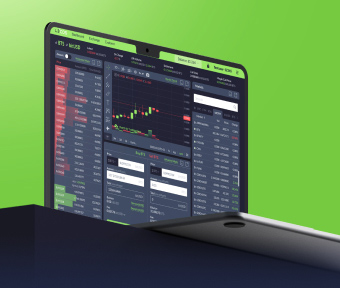
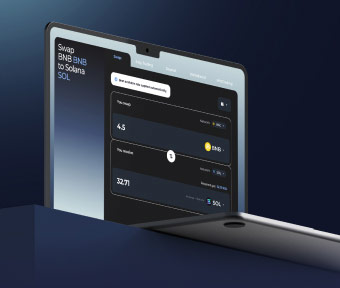
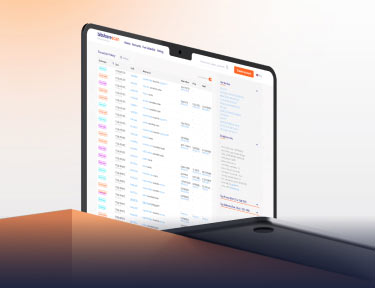
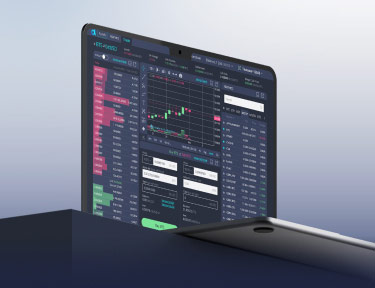
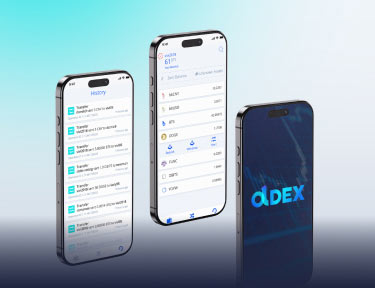
A CEX evolved into a hybrid crypto exchange with swaps built into the app
001
ClientA European exchange with fiat on/off ramps.
002
ChallengeUsers wanted immediate access to all new tokens available on the market, including newly launched tokens
003
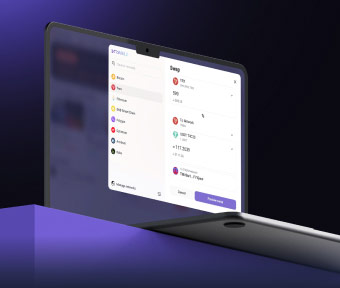
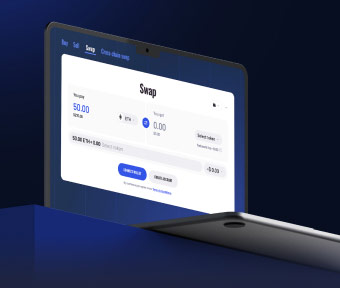
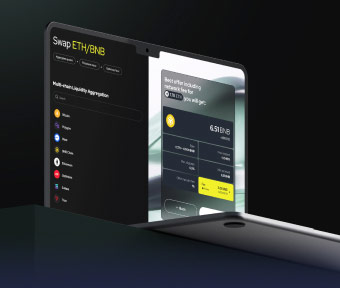
SolutionEmbedded on-chain swaps inside the regulated app: CEX - DEX integration
The DEX market
is growing and CEX
has to keep up
Only a few years ago, decentralized trading was a niche thing. Almost all trading was happening on CEXs.
That changed fast. In just five years, the DEX to CEX ratio grew from <1% to almost 20%, and it only continues to grow:

Centralized trading has a weak point: the listing is too slow. By the time a token is listed on a CEX, it can be trading on DEXs on average for 2-8 weeks. Traders who want early access have no choice but to use a DEX
too slowly
Centralized trading has a weak point: the listing is too slow. By the time a token is listed on a CEX, it can be trading on DEXs on average for 2-8 weeks. Traders who want early access have no choice but to use a DEX.
This matters even more as the market matures. There’s a massive growth in stablecoin adoption and asset tokenization. It all means more demand for alternative tokens.
The goal
Make on-chain swaps feel as simple as CEX trading

If CEX clients could access decentralized liquidity, they would not need to go elsewhere to trade new assets.
But access alone was not enough. For most traders, the standard DEX experience is still too complex. Private keys, seed phrases, wallet setup, transaction signing, and gas management all create friction that many users are not ready for.
To make on-chain swaps work inside a regulated exchange, we had to remove that friction and deliver a trading experience that felt closer to a CEX than to a traditional DEX.
Compliance challenge
How to add swaps without losing control over trading?
Our client is a regulated exchange with centralized order books. They follow strict AML and KYC. Like any other regulated platform, they must be able to monitor and restrict transactions.
Integrating swaps is not enough. A DEX is only a transaction protocol. It can route and execute swaps, but it does not provide custody. A simple CEX DEX integration would push users into external non-custodial wallets, taking the governance away from the exchange.
But the compliance obligations do not disappear just because part of the trading flow moves on-chain. The exchange still has to meet the same AML standards, except now it’s a much harder environment to control.

A separate exchange was not the answer
The easiest solution would be to launch a DEX as a separate business, completely disconnected from the main exchange. But that would have defeated the whole purpose.

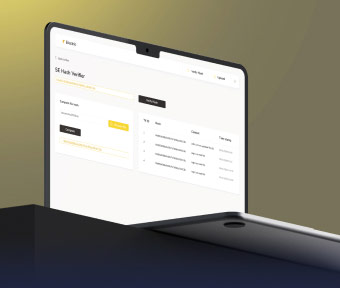
That’s why we integrated DFNS WaaS
We needed to add swaps into the existing app, but separate the CEX/DEX trading flows. Basically, we needed to make a hybrid crypto exchange:
2 exchanges within one app.
UX challenge: How to remove gas friction from standard wallets?

Most centralized exchanges use internal order books. Trades are matched off-chain, and users do not need to think about transaction mechanics. From the user perspective, trading is simple: they place an order and the platform handles the rest.
Even if users are willing to pay for gas, there is still a catch: they need the network’s native token before they can make the swap. For example, a user who wants to buy ETH with USDC still needs some ETH first to cover gas. So before users can buy the token they want, they already need to hold it.
Why gas sponsorship
is harder than it sounds
There is an obvious solution: let the platform sponsor gas fees. In practice, that is not straightforward with traditional externally owned accounts. Standard wallet setups do not support gas sponsorship out of the box. In many cases, enabling it means moving to smart contract wallets, which adds a lot of unnecessary complexity. A full move to smart contract wallets would require much deeper architectural changes.
We adopted Ethereum upgrades just when it’s made possible
EIP-7702 allows standard wallets to take on some smart-account behavior, including support for sponsored transactions. That gave us a clean way to reduce gas friction without redesigning the entire custody setup. As a result, users could access on-chain swaps more easily, while the platform kept the wallet architecture aligned with its broader compliance and custody model.
Results
“We didn’t want users to leave our platform to trade anywhere else. The integration helped us keep that activity inside our own ecosystem, without breaking the rules we have to operate by”
 Access to thousands of tokens
 No external wallet dependency
 Regulated environment preserved
crypto exchange?